Welcome to the Mathematical World!
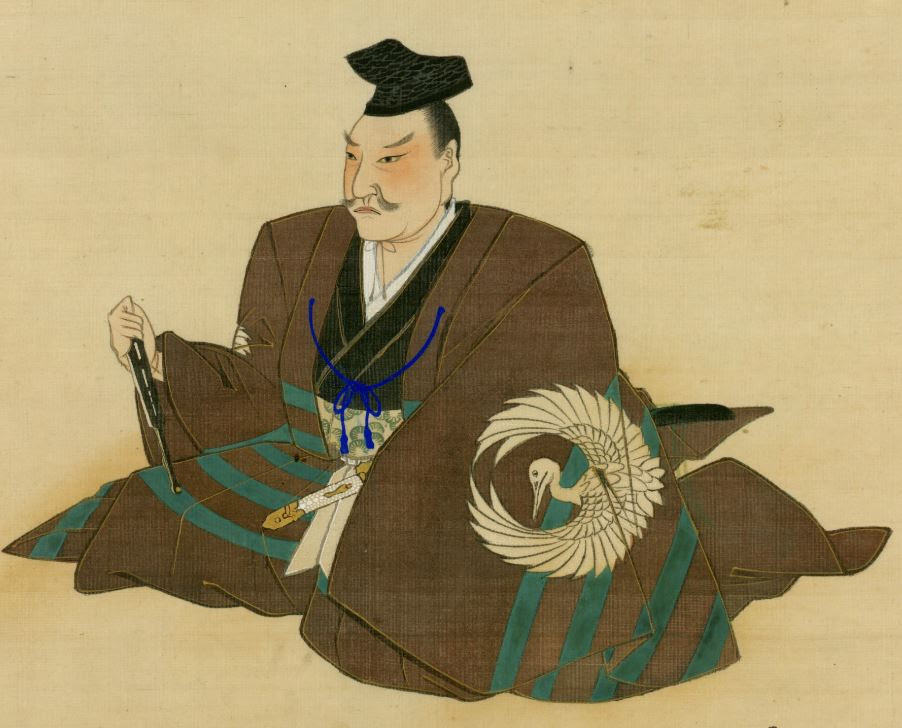
Takakazu Seki
Founder of Japanese Mathematics (Wasan)
Takakazu Seki (1642–1708), often hailed as the “Newton of Japan,” was the leading figure of Wasan, the Japanese school of mathematics that flourished independently from European traditions. Largely self-taught, Seki studied Chinese texts before developing original methods that paralleled key ideas of Western mathematics. He is best known for introducing early forms of determinants to solve systems of equations, centuries before Cramer’s Rule was formalized in Europe. His insights into polynomial equations and algebra also anticipated techniques later used by European mathematicians.
Seki’s work on Enri (circle principle) provided approaches to approximating areas of circles and curved figures, foreshadowing integral calculus. For instance, he investigated infinite processes similar to the method of exhaustion, which can be expressed today in the language of limits: \ This demonstrates how his methods approached modern integration. His most famous treatise, Katsuyō Sanpō, contained problems on algebra, geometry, and combinatorics that revealed striking originality, including results akin to the binomial theorem.
Though Japan was isolated during the Edo period, Seki’s innovations illustrate a remarkable parallel development of mathematical thought. He established a strong school of disciples, ensuring the spread of Wasan throughout the country. His emphasis on rigorous problem-solving, creative use of algebra, and adaptation of infinite processes secured his legacy as the founder of Japanese mathematics. Today, he is celebrated for showing that mathematical creativity flourished independently across cultures.

All rights reserved by the Mathematical Unity
Contact: +8801400044645
Email: mathematicalhorse1453@gmail.com
Our Discord Server: Mathematical Unity [Ulus Riyadiyat]